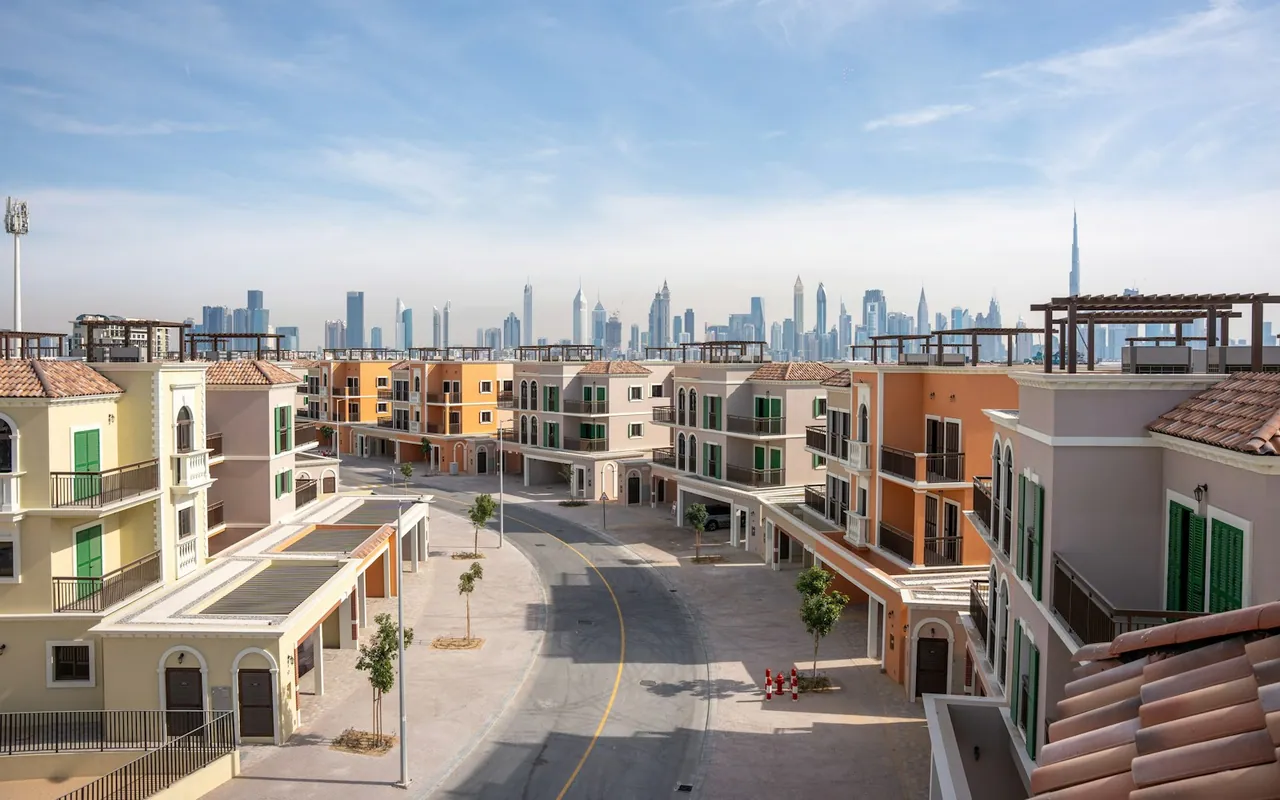
Established affordable apartment community with metro access, mature landscaping and an ageing building stock.
Representative photography. Explore the guide for area-specific details.
Get to know the neighbourhood
Discovery Gardens at a glance
Discovery Gardens is organised into Zen, Mediterranean, Contemporary, Mogul, Mesoamerican and Cactus clusters. Nakheel describes a large apartment community with the Discovery Gardens Pavilion, while the named Metro station adds a practical transport reference for individual buildings.
01
Six clusters clarify the address
Nakheel identifies six garden-themed clusters: Zen, Mediterranean, Contemporary, Mogul, Mesoamerican and Cactus. Use the correct cluster and building number together when searching, because the theme name alone does not identify the floor plan, outlook or distance to a station entrance within this extensive apartment development.
The Emirates News Agency’s report of RTA’s Route 2020 opening includes Discovery Gardens station. For a residential comparison, the useful next step is to walk the route from the particular building. A delivered station supports a real transport option, while the last part of the journey remains address-specific.
Nakheel includes Discovery Gardens Pavilion in the community’s amenities. Our interpretation is to compare the nearest everyday services with the building’s apartment layout and condition; a large community can offer local shopping without every building having the same convenient route or relationship to active retail areas.
Discovery Gardens is a large, low-rise apartment community built in themed clusters with unusually generous landscaping for its price point. It has long been one of the most reliable affordable rental markets in Dubai.
Its stock is ageing, and the arrival of newer apartment supply nearby has given its traditional tenant base alternatives it did not previously have.
Location & connectivity
Near Jebel Ali off Sheikh Zayed Road, with Discovery Gardens metro on the Route 2020 line and good access to Jebel Ali, Ibn Battuta and the western employment corridor. The metro connection is central to the community's rental appeal.
Property & neighbourhoods
Apartments in six themed clusters: Zen, Mediterranean, Contemporary, Mogul, Mesoamerican and Cactus. Compare the exact building number and apartment plan, because room mix, balcony provision, outlook and access differ within the wider community.
Who lives and invests here
Yield-focused investors and, at the lower end, first-time buyers. Tenants are predominantly working professionals and families in the affordable segment, drawn by metro access and the price point.
Ownership & lifestyle
Freehold. The lifestyle benefit is the landscaping, which is genuinely mature and better than the price point implies. Buildings are walk-up in many clusters, and parking is a known constraint.
Costs of ownership
Charges are low in absolute terms, consistent with the low-rise format and the price point, but represent a meaningful share of rent. Cluster-level variation exists and should be confirmed.
Fixed within the community, but competition from newer apartments in Al Furjan, JVC and the surrounding corridor is meaningful and increasing. That competition targets exactly the same tenant profile.
What to consider
Building age brings maintenance exposure and, in some clusters, significant refurbishment requirements. Unrenovated units let at a discount that can erase the apparent yield advantage. Parking limitations affect lettability. Competition from newer nearby stock is the medium-term structural risk.
The Firswood perspective
We model Discovery Gardens on net yield after a realistic refurbishment allowance, not on gross. The metro proximity is the durable advantage; the ageing stock is the durable liability, and a purchase only works when the second is properly costed.
What are the six official Discovery Gardens cluster names?
+
Nakheel names Zen, Mediterranean, Contemporary, Mogul, Mesoamerican and Cactus. When reviewing a listing, combine the correct cluster with the building number and apartment type. This avoids confusion from abbreviated or inconsistent labels and provides a better starting point for checking the actual location, facilities and route to everyday destinations.
How should I compare Discovery Gardens buildings for Metro use?
+
Identify the station entrance you would use and walk from each candidate building’s lobby. Check crossings, shade and the return route while carrying shopping. The existence of a station is useful, but distance and access can differ across the community, so a building-specific test is more informative than a general Metro label.
What should I check in a Discovery Gardens apartment without a balcony?
+
Assess daylight, ventilation, drying and storage arrangements, then consider whether the internal space suits the intended occupant. A balcony-free layout can work for some households, but its practical implications deserve a direct comparison with alternatives. Inspect the actual windows and room proportions rather than assuming all buildings use the same plan.
Why does building condition matter alongside Discovery Gardens’ landscaping?
+
The garden setting describes the community, while lift operation, water systems, cooling and common-area maintenance affect the apartment itself. Inspect both during the same visit. An appealing outdoor environment can complement a well-maintained home, but it does not establish the condition or future work requirements of the specific residential building.
Sources & further reading
Written by Firswood Properties. Guide updated . Community details checked on . Plans and facilities can change; use the linked primary sources to check a specific project.